

Differences Between 5083 and 5754 Aluminum in Tank Truck Manufacturing


In the tank truck manufacturing industry, aluminum, with its advantages of lightweight, corrosion resistance, and ease of processing, is gradually replacing traditional steel as the mainstream material. Among them, 5083 and 5754 aluminum alloys are widely used in the production of various tank trucks due to their strong performance compatibility. What are the differences between them?
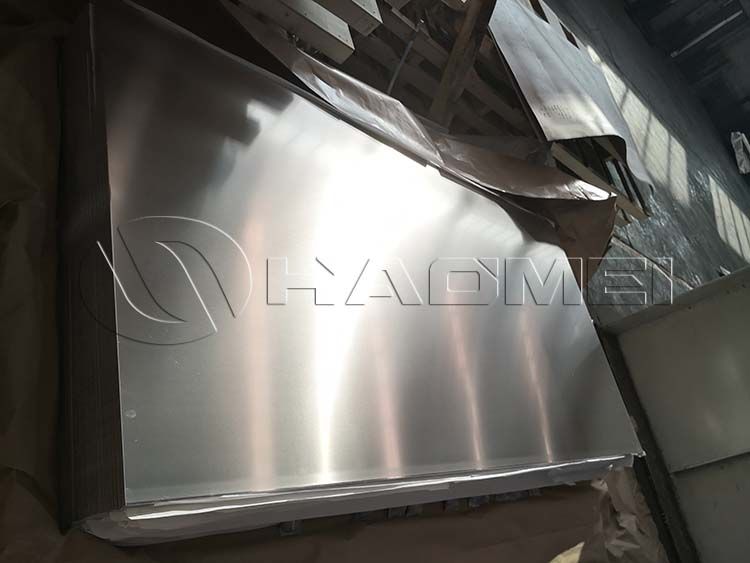
5083 aluminum plate
5083 aluminum for sale belongs to the Al-Mg series of rust-resistant aluminum alloys, with a magnesium content as high as 4.0%-4.9%. This core component gives it strength and stress corrosion resistance far exceeding that of ordinary aluminum materials, thus occupying an important position in the tank truck field where material rigidity and impact resistance are extremely important.
Suitable tank truck types
The high strength of 5083 aluminum plate makes it the preferred material for high-pressure gas tank trucks (such as liquefied petroleum gas tank trucks and natural gas tank trucks) and heavy-duty liquid tank trucks (such as crude oil tank trucks and asphalt tank trucks). Furthermore, in tank trucks transporting highly corrosive media such as acids and alkalis, 5083 aluminum can also reduce the erosion of the tank body due to its good corrosion resistance.
Core applications
In tank truck structures, 5083 aluminum is primarily used in the main pressure-bearing areas of the tank body. This is the core component that withstands the pressure of the medium, requiring the most stringent strength and toughness from the material. Simultaneously, the tank truck end caps (the arc-shaped structures at both ends of the tank body) are also often made of 5083 aluminum due to the need to withstand significant localized stress.
Key performance advantages
5083 aluminum boasts a tensile strength exceeding 300 MPa and a yield strength of approximately 150 MPa, significantly higher than ordinary aluminum materials, meeting the strength requirements under high pressure and heavy load conditions.
Furthermore, it possesses good toughness and does not easily become brittle in low-temperature environments, making it suitable for tank trucks used in cold regions.
Its corrosion resistance is also excellent, especially in marine climates or when exposed to corrosive media, where a stable oxide film forms on the surface, preventing further corrosion spread.
However, welding 5083 aluminum is relatively difficult, requiring advanced welding processes and skilled welders, resulting in slightly higher welding costs compared to ordinary aluminum materials.
5754 aluminum
5754 aluminum also belongs to the Al-Mg series aluminum alloys, but its magnesium content is slightly lower, at 2.6%-3.6%. This makes it slightly less strong than 5083 aluminum, but it has advantages in processing performance and economy, making it suitable for tank truck applications with moderate strength requirements.
Suitable tank truck types
5754 aluminum is mainly used in atmospheric pressure liquid tank trucks, such as drinking water tank trucks, food-grade liquid tank trucks (such as milk tank trucks, juice tank trucks), and general chemical raw material tank trucks (such as ethylene glycol tank trucks, lubricating oil tank trucks), etc.
These types of tank trucks transport media with lower pressure, and the requirements for tank strength are relatively relaxed, with more emphasis on the economy, processing convenience, and hygiene of the material. The non-toxic, odorless, and easy-to-clean properties of 5754 aluminum make it particularly widely used in food-grade tank trucks.
Core applications
In tank truck manufacturing, 5754 aluminum is commonly used in non-pressure-bearing areas of the tank body, such as the outer layer of the tank sidewalls (the inner side is usually fitted with an anti-corrosion coating or lining), side guards (protective structures for the sides of the tank), mudguards, and other auxiliary components.
For some small atmospheric pressure tank trucks, due to their smaller overall load, 5754 aluminum is also used to manufacture the entire tank body.
Furthermore, 5754 aluminum is an ideal choice for personnel movement structures such as operating platforms and ladders in tank trucks, where a balance between lightweight design and sufficient load-bearing capacity is required.
Key performance advantages
5754 aluminum has excellent machinability, facilitating bending, stamping, and welding, enabling rapid prototyping of complex tank truck structures and significantly improving production efficiency.
Its welding difficulty is relatively low; high-quality welds can be achieved using ordinary argon arc welding processes, resulting in relatively low welding costs. Simultaneously, 5754 aluminum is more affordable than 5083 aluminum, effectively reducing the manufacturing cost of tank trucks.
In terms of hygiene, it meets food-grade contact standards, has a smooth surface that is not prone to bacterial growth, and is suitable for transporting media with high hygiene requirements, such as food and drinking water.
However, aluminium 5754 has relatively low strength, with a tensile strength of approximately 230 MPa and a yield strength of approximately 110 MPa. It cannot withstand excessive pressure and load, making it unsuitable for high-pressure, heavy-duty tank trucks.
5083 VS 5754 Aluminum
To more clearly demonstrate the differences between the two aluminum materials, we compare them from the core dimensions of tank truck applications:
1. Application scenarios: 5083 aluminum focuses on high-pressure, heavy-duty, and special corrosive media tank trucks; 5754 aluminum is mainly for normal pressure, ordinary media, and food-grade tank trucks, forming a clear division of application.
2. Core performance differences: Strength is the most crucial difference between the two. 5083 aluminum is characterized by high strength and high toughness, while 5754 aluminum excels in excellent processability and economy.
3. Manufacturing cost differences: 5083 aluminum has higher raw material prices and welding costs, making it suitable for high-end tank trucks with extremely high safety requirements; 5754 aluminum has lower overall costs, making it suitable for mass-produced ordinary tank trucks.
Original Source:https://www.aluminumtankerplate.com/a/differences-between-5083-and-5754-aluminum-in-tank-truck-manufacturing.html
Tags: 5083 aluminum plate ,