

Aluminium 5754 Properties


Aluminium 5754 is an Al-Mg alloy widely specified where corrosion resistance is the primary material concern. Designated EN AW-5754 under EN 573-3, it belongs to the 5000 series and is commonly known as AlMg3. Its combination of moderate strength, weldability, formability, and resistance to atmospheric and marine exposure supports use in transport, marine structures, vehicle panels, pressure equipment, flooring, and architectural components.
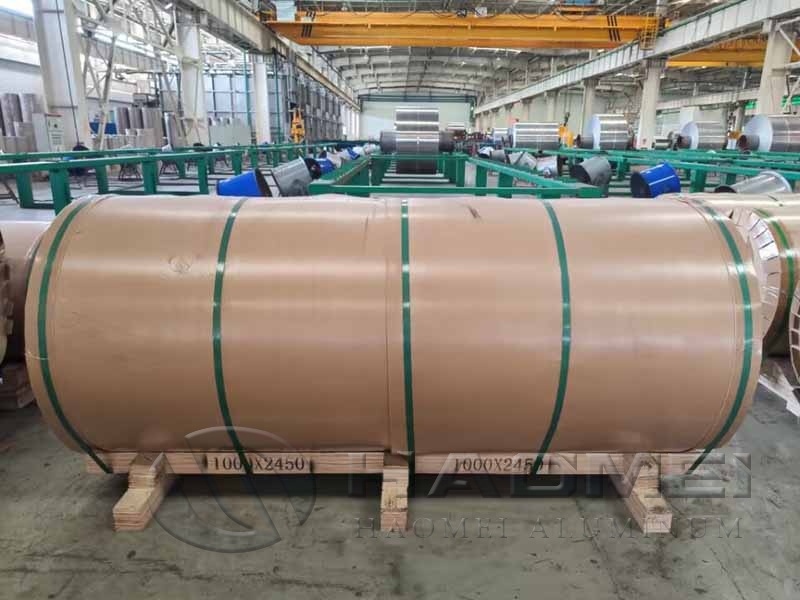
The most important practical feature is its corrosion performance after fabrication. Unlike heat-treatable alloys, 5754 gains strength mainly through cold working, so temper selection, welding design, and surface condition must be controlled together.
Verified 5754 Alloy Composition and Core Properties
EN 573-3 defines the chemical composition limits for EN AW-5754. Magnesium is the principal alloying element, providing solid-solution strengthening and helping improve corrosion resistance. Material certificates should identify the applicable standard, melt number, temper, dimensions, and measured chemistry.
| Element | EN AW-5754 composition limit, % by mass |
|---|---|
| Magnesium, Mg | 2.6-3.6 |
| Manganese, Mn | 0.0-0.5 |
| Chromium, Cr | 0.0-0.3 |
| Iron, Fe | Maximum 0.4 |
| Silicon, Si | Maximum 0.4 |
| Copper, Cu | Maximum 0.1 |
| Zinc, Zn | Maximum 0.2 |
| Titanium, Ti | Maximum 0.15 |
| Aluminium | Balance |
The following values are commonly used for preliminary engineering calculations. Confirm final design inputs with the mill test certificate and the applicable product standard, because thickness, temper, and test direction affect mechanical results.
| Property | Typical value or range | Selection impact |
|---|---|---|
| Density | Approximately 2.66 g/cm³ | Reduces component mass versus carbon steel |
| Elastic modulus | Approximately 70 GPa | Deflection must be checked in thin sections |
| Melting range | Approximately 600-650°C | Not a service-temperature limit |
| Thermal conductivity | Approximately 130-150 W/m·K | Useful for heat-spreading applications |
| Electrical conductivity | Approximately 30% IACS | Not normally selected as an electrical conductor |
| Weldability | Excellent by MIG and TIG | Appropriate filler selection remains necessary |
| Corrosion resistance | Very good in atmosphere and seawater | Surface contamination can still initiate attack |
For flat rolled products, EN 485-2 specifies mechanical-property requirements by thickness and temper. For example, H111 material prioritizes formability, while H22, H32, and H34 tempers provide progressively higher work-hardened strength with lower forming latitude. Do not compare tensile strength without matching the temper and thickness range.
Corrosion Resistance: The Main 5754 Selection Issue
5754 performs well in humid, industrial, and marine atmospheres because its magnesium-bearing aluminium oxide film provides durable protection. It is regularly considered for vehicle body components, platform structures, storage equipment, and marine-adjacent fabrication.
However, corrosion resistance is not automatic. The following issues cause many avoidable field failures:
Chloride deposits left on the surface. Salt, process water, and road de-icing residue can create localized corrosion where moisture remains trapped.
Galvanic contact with dissimilar metals. Direct contact with stainless steel, copper alloys, or carbon steel in a wet environment can accelerate attack on aluminium. Use isolating washers, coatings, sealants, or compatible joint design.
Crevices and water traps. Overlapping joints, unsealed fasteners, and horizontal ledges retain electrolyte. Ensure drainage and allow access for cleaning.
Iron contamination from fabrication. Carbon-steel grinding dust or tools can embed particles into the surface and rust. Segregate aluminium fabrication tools and clean surfaces after machining.
Incorrect cleaning chemistry. Strong alkaline cleaners or chloride-containing agents can etch or stain the surface. Validate cleaners on representative test panels.
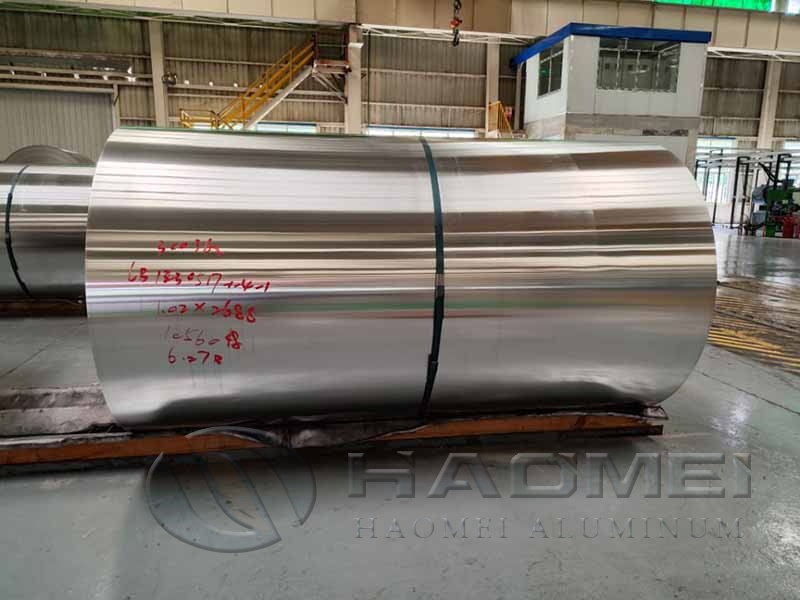
For fabricated tanks and vehicle structures, assess the service medium, operating temperature, weld design, cleaning procedure, and exposure cycle before fixing a temper. Where greater strength is essential for marine structures, compare Aluminium 5083, but account for its different strength profile, availability, and forming behavior.
Temper, Product Form, and Acceptance Checklist
5754 is available in plate, slit material, circles, and thin-gauge rolled material. Product form influences flatness, edge quality, surface finish, and allowable thickness tolerance. For deep drawing or complex press forming, H111 or O temper is commonly assessed first. For panels requiring better dent resistance, H22 or H32 may be more suitable, subject to bend tests and forming trials.
| Requirement | Recommended action |
|---|---|
| Deep drawing | Request annealed or low-work-hardened temper and confirm minimum bend radius |
| General fabrication | Specify H111 when moderate strength and reliable forming are needed |
| Increased panel stiffness | Evaluate H22 or H32, then test cracking at bends and formed corners |
| Marine or road-salt exposure | Specify surface cleanliness, drainage design, isolation from dissimilar metals, and protective finishing where needed |
| Welding | Define process, filler, joint design, and post-weld cleaning in the fabrication procedure |
| Decorative surface | Agree on finish, protective film, allowable surface defects, and inspection lighting conditions |
Use this purchase specification checklist before releasing material:
Identify alloy as EN AW-5754 and state the governing standard, such as EN 573-3 for composition and EN 485-2 for mechanical properties.
State temper, thickness, width, length or coil mass, dimensional tolerances, and permitted camber or flatness.
Define the required mechanical values for the actual thickness band rather than using generic alloy data.
Request EN 10204 Type 3.1 inspection documentation when traceability is required.
Specify surface class, edge condition, protective film, packaging, and moisture protection for transport and storage.
Require coil direction and grain-direction marking where forming orientation affects production yield.
For transport equipment exposed to salt spray and repeated loading, Aluminum 5454 is also worth evaluating when its application-specific strength and elevated-temperature behavior better align with the design envelope.
Current lightweighting programs in electric vehicles, rail, and commercial transport continue to increase attention on recyclable aluminium systems. In parallel, environmental reporting requirements are becoming more common in tenders. When embodied-carbon data is required, request a product-specific Environmental Product Declaration where available, along with the production route and recycled-content documentation. These records are separate from alloy compliance and should not replace chemical or mechanical certification.
A controlled 5754 specification combines the correct temper with corrosion-aware joint design, traceable test documentation, and surface requirements that match the actual exposure environment.
Original Source:https://www.aluminumtankerplate.com/a/aluminium-5754-properties-2026-09-28.html
Tags: aluminium 5754 properties , EN AW-5754 , 5754 aluminum corrosion resistance , AlMg3 alloy ,