

5454 Aluminum Plate


5454 Aluminum Plate Questions Being Asked for Industrial Projects
The following topics reflect recurring English-language questions appearing in public search and Q&A discussions during the past three months. For project teams selecting material for tank bodies, transport equipment, pressure vessels, and fabricated structures, the practical details matter more than a nominal alloy number.
| Topic | What users want to know | Practical decision point |
|---|---|---|
| Alloy performance | Is 5454 strong enough and corrosion resistant enough? | Match temper and thickness to service loads. |
| Tank applications | Why is 5454 specified for road tanks? | Consider corrosion, forming, weldability, and applicable code requirements. |
| Temper selection | Is H32 or H34 the better choice? | Balance required strength against bend radius and forming severity. |
| Welding | Does welding weaken 5454? | Plan around heat-affected-zone softening in design calculations. |
| Material verification | What should be checked before ordering? | Confirm chemistry, mechanical values, dimensions, and inspection documents. |
1. Is 5454 aluminum plate better than 5052 or 5754 for tanker work?
5454 aluminum plate is a non-heat-treatable aluminum-magnesium alloy developed for applications involving moderately elevated temperatures and demanding corrosion exposure. Its magnesium level is generally higher than 5052, giving it stronger mechanical performance in common strain-hardened tempers. Compared with 5754, 5454 is often selected where tank fabricators need a recognized alloy for highway tanker construction and similar welded service.
The word "better" depends on the application. For a chemical or fuel tanker body, the selection should consider transported media, operating temperature, wall thickness, welding layout, fatigue loading, and regulatory requirements. 5454 has a strong reputation for road transport tanks because it combines corrosion resistance, formability, and weldability without relying on heat treatment for strength.
A project using marine exposure or highly aggressive salt conditions may also compare 5454 with 5083. However, 5083 is a higher-strength alloy with different forming behavior and may not be the most economical or practical choice for every tank geometry. For tank-focused specifications, review available aluminum sheets for tank truck options alongside the full fabrication requirement, rather than choosing solely by tensile strength.
2. What temper should I choose for 5454 aluminum plate: H32, H34, or O?
This is one of the most important questions because temper affects both strength and fabrication response. H32 is commonly used when a project needs a useful combination of moderate strength, corrosion resistance, and workable bending performance. H34 has a higher degree of strain hardening, so it normally provides higher strength but may require a larger bend radius and more controlled forming.
O temper is annealed and comparatively soft. It is suitable for severe forming operations, deep drawing, or shapes with tight radii, but it provides lower yield strength. If formed components will later be welded into a structural tank section, the final design should not assume the original H34 strength remains unchanged near welds.
| Temper | Relative strength | Formability | Typical consideration |
|---|---|---|---|
| O | Low | Excellent | Complex forming and tight-radius work |
| H32 | Medium | Good | General fabricated tank and transport parts |
| H34 | Higher | Moderate | Applications needing added strength with controlled bends |
A purchase order should state alloy, temper, thickness tolerance, width, length, flatness requirement, surface condition, and applicable standard. "5454 plate" alone leaves too much room for interpretation.
3. Is 5454 aluminum plate corrosion resistant enough for fuel, chemicals, and outdoor transport?
5454 offers good general corrosion resistance because of its aluminum-magnesium chemistry. It performs well in outdoor transport environments and is commonly considered for tanks carrying petroleum products and many non-aggressive liquids. Still, corrosion resistance is never a blanket approval for every chemical.
The transported product can contain water, chlorides, sulfur compounds, cleaning residues, or contaminants that change corrosion behavior. Temperature also matters. A liquid that is acceptable at ambient temperature may behave differently under heated cleaning cycles or prolonged elevated-temperature exposure. Before material approval, compare the alloy with the exact cargo specification, concentration range, expected temperature, drainage condition, and cleaning method.
Fabrication quality has an equally large effect. Crevices, trapped moisture, poorly sealed joints, incompatible fasteners, and contact with more noble metals can create localized corrosion risks. Insulating dissimilar metals and providing proper drainage are often more valuable than simply selecting a thicker plate.
For broader alloy comparison, the product information for Aluminum 5454 can help align temper and dimensional requirements with the intended service environment.
4. Can 5454 aluminum plate be welded without losing too much strength?
Yes, 5454 is generally regarded as readily weldable by conventional aluminum welding processes, including MIG and TIG, when correct procedures and qualified operators are used. The important limitation is that strain-hardened tempers soften in the heat-affected zone. Welding does not make the metal unusable, but local mechanical properties near the weld can be lower than those of the original H32 or H34 base material.
For this reason, sound engineering calculations use appropriate welded-condition values rather than only mill-condition tensile values. Joint type, filler selection, weld size, heat input, restraint, and post-weld inspection should all be addressed. Excess heat can increase distortion, while inadequate cleaning can cause porosity and inconsistent weld quality.
Prior to production, confirm the welding procedure specification, filler alloy compatibility, and required inspection level. For critical tank structures, test coupons and procedure qualification are sensible safeguards, especially when wall thickness or service conditions are demanding.
5. What documents and checks should be requested with 5454 aluminum plate?
New project teams often focus on price and overlook verification details that affect fabrication yield. At minimum, request a mill test certificate showing alloy chemistry, temper, tensile strength, yield strength, elongation, dimensions, and relevant production standard. If the plate will be used in a regulated transport tank, confirm that the material documentation and traceability format satisfy the governing code or customer specification.
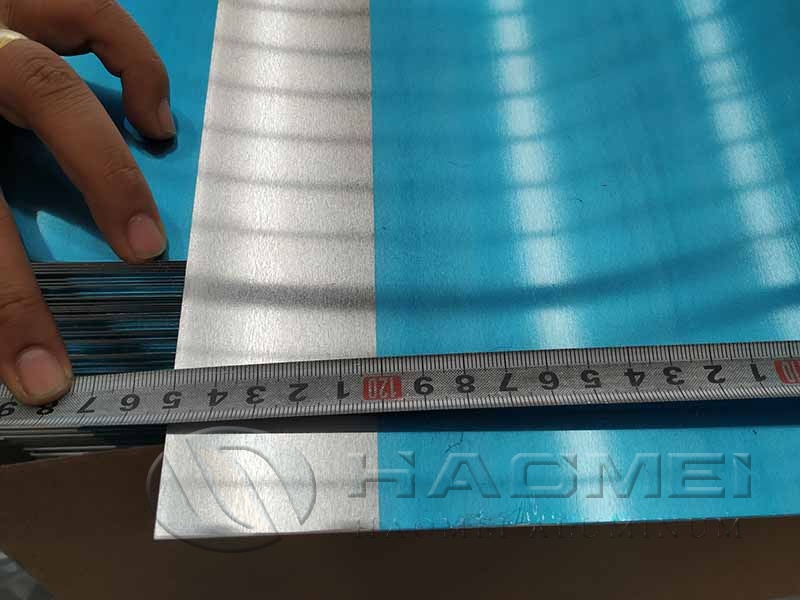
Also clarify whether the quoted thickness is nominal or guaranteed minimum, whether edges are mill, trimmed, or saw-cut, and what flatness tolerance applies. Large-format plates can be especially sensitive to handling and storage, so protective packaging and surface requirements should be specified before dispatch.
A practical incoming inspection can include the following checks:
Verify heat number identification against the mill certificate.
Measure thickness at multiple positions, including near edges.
Inspect for dents, deep scratches, oxidation staining, and handling marks.
Confirm length, width, squareness, and flatness against the purchase order.
Review temper and mechanical-property values before cutting or forming.
Keep material traceability records connected to each fabricated component.
These checks help prevent expensive rework when the material reaches forming, welding, or final assembly.
Original Source:https://www.aluminumtankerplate.com/a/5454-aluminum-plate.html
Tags: 5454 aluminum plate , Aluminum 5454 , tanker plate , 5454 aluminum properties , 5454 H32 plate ,